

the marriage plot
on my tenth wedding 'anniversary', I contemplate how the fuck that happened, the ease of falling into the trap of tradition; the freedom of not belonging to anyone and the strangeness of marriage

Is this my final essay on love and heartbreak? quite possibly, and most definitely for 2025. it’s the last one I needed to write, for now. thank you for reading.
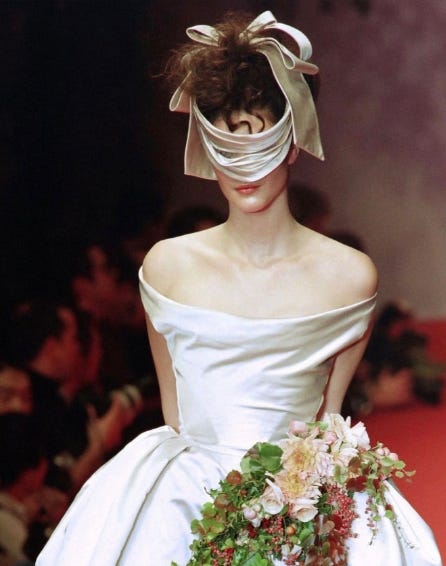
I’m writing this from my desk in my newly-acquired single-girl-spinster-divorceé-cat-lady-without-a-cat flat, in front of the bookshelves I’ve had made by a friend of a friend who met via an ENM dating app because that’s the kind of city I live in, and I couldn’t be happier to be home alone. The first home that nobody will be able to disrupt, interfere with, dismantle, or take from me, in a spiritual or practical sense.
As I unpacked my last box of books, it struck me that exactly ten years ago, I was getting ready for my wedding - an event that now feels like it happened to somebody else, a glitch in my timeline. I walked past my ex-husband this summer. He looked like he was on a date. I said nothing, kept walking. In the November of 2015, that same man was touring the US with his band, and I was at home, rolling jam jars in glitter, making tassel garlands and sewing tablecloths. I had spreadsheets and itineraries and piles of wedding paraphernalia stored under my desk at work. I ordered my wedding dress from a shop in Australia during one of the stoned and lonely nights I spent in the nine weeks my fiancé was away, and when it arrived I carried it home from work in a Sainsbury’s bag-for-life, along with the guilty thought that maybe, possibly, this wasn’t how it was supposed to be. I kept waiting for the special feeling we’re led to believe permeates the nuptial approach, but instead I could taste stress, anxiety, and a slight resentment, resigned as I was to doing everything alone. At the time, I attributed the amount of project management I had to do to our DIY, punk spirit. We were getting married, but we weren’t doing it in the traditional way.
We were meeting in Vegas to elope beforehand. A trip I’d arranged around the end of his tour; the mid-level package at Cupid’s Chapel paid for on a credit card. Today, ten years ago, I was waking up at The Flamingo hotel on the Vegas strip, shivering in air conditioning as I did my hair and make-up, sending my fiancé out for aspirin to stave off the headache that appeared mid-morning (a woman’s body always knows, as I’ve since learned). The rest of the day was deeply romantic [I wrote about a decent chunk of it here]. I wouldn’t change it, and look back at it fondly as a scene in the the bias-cut movie of my life*. I haven’t covered up my wedding tattoo because it feels like an in-joke only I get to laugh at.
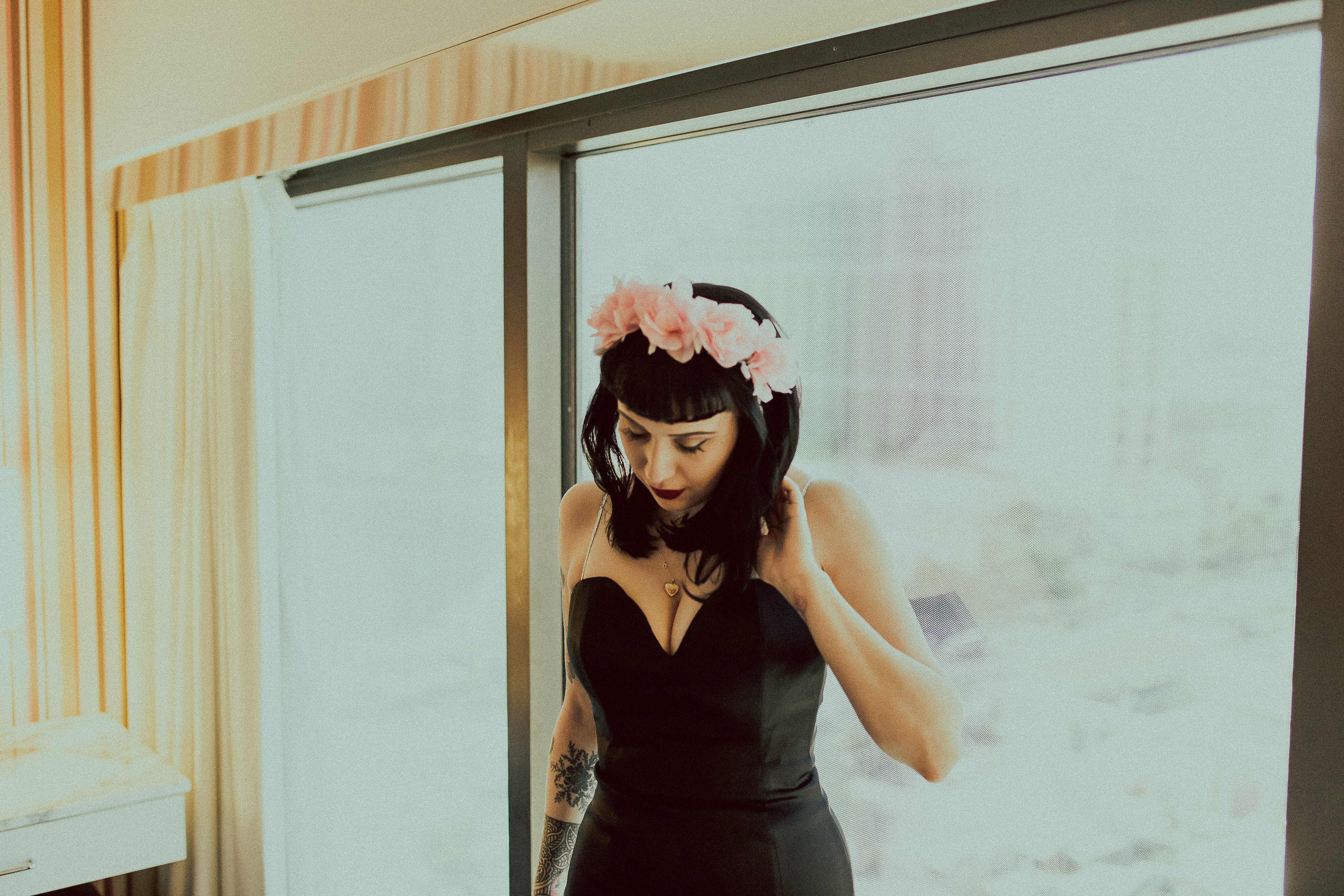
We’d told our families about the Vegas elopement in advance and had been met with disappointment, which prompted us to plan the second ‘big’ wedding here in Brighton (featuring the glittery jam jars and hand-sewn tablecloths). We would get married-married, if that’s what our families wanted, but again, not in the traditional way. I didn’t want to cut a cake - symbolic of the woman’s hymen being pierced - or throw my bouquet like a trophy for another woman to catch. My dress was black, because trying on white ones felt like putting on a costume; hilariously, I wore a secondhand one for my Halloween hen do, dressed up as a Haversham-esque jilted bride. We wrote our own ceremony and I painted a table plan. We made our own playlist and I bought £3 roses from Tesco.
It was fine, I thought, but part of me knew. I sat in bed alone on the morning of the ‘big’ wedding thinking I don’t want to do this. I’d already been married for five days. There was no need for this performance. The only reason I was doing it was because I loved him.
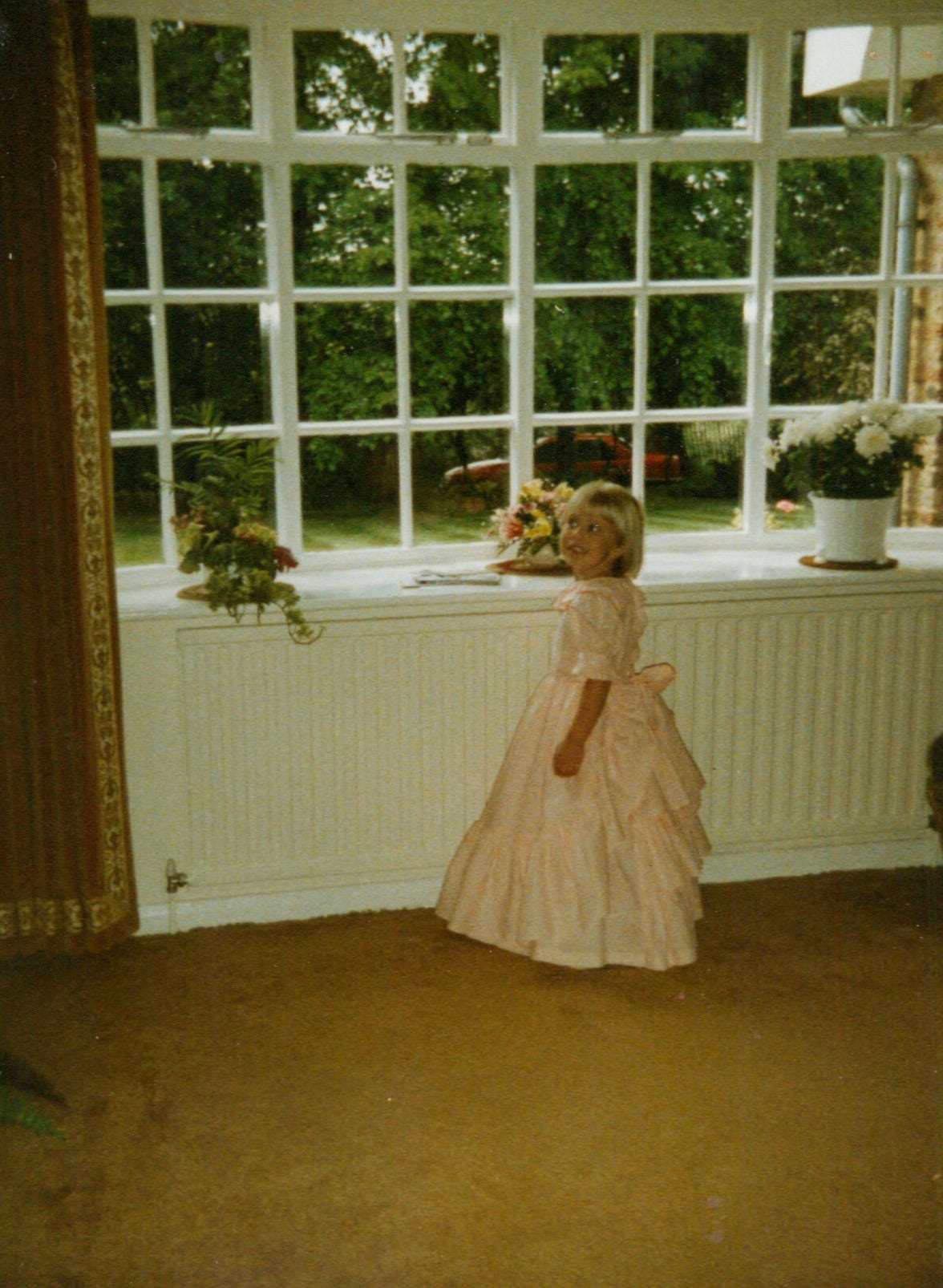
Our determination to ‘play’ at having a wedding, of doing all the usual things - a ceremony, a meal, a party - but in a silly, ironic way, was our refusal to admit that we were capitulating to the standardised expectations of a relationship. Or I was, at least. When I was a little girl, I didn’t want to get married. I didn’t fantasise about it, the way some do. I did become briefly entranced with the concept of a wedding ceremony, after I’d been a bridesmaid. My dad has a mortifying home video of me parading the garden in a petticoat and a large white paper cone of a hat, which appears worryingly racist, but is my way of mimicking both the priest and the bride, as I recite the wedding ritual in their different voices. As a teenager, I was fixated on my potential career and desperate to be a grown woman, living a glamorous, creative life - finding eternal love wasn’t something I thought about, possibly because I had so little regard for myself that it seemed an unlikely possibility. And then I experienced romantic love for the first time. Whilst it exploded my unformed, unstable brain, and became something that would make me do bizarre, impulsive things, it still didn’t make me want to get married. I adored the idea of forever; the romance of it, the Romeo-and-Juliet-I-would-die-for-you of it, but I saw no need to sign on the line of a marriage certificate in order for that to come to pass. Somehow, between the years of 2013-2016, whilst being the most in love a person can be, I forgot who I was, and more importantly, what I didn’t want.
It’s only when I was on the other side of marriage that I realised how truly strange it is; particularly the surname part. An old friend messaged me and I didn’t recognise her name; I jolted up, thinking a stranger had my number, when in fact it was another of my progressive female friends who’d given up part of her personhood, her identity, after she’d got married. I am baffled that even the most feminist people I know still perpetuate this ritual of removal. The romantics will claim that it’s a gain, not a loss, but it’s only once you’re trying to get your old name back that you realise how intrinsic it is to your sense of self. It’s the name you’ve grown up with, studied with, created a life with, made work with, and yet in an instant, you give that all away. It neatly subsumes us into our partner’s life in the eyes of the state, which is what, ultimately, marriage does, no matter how liberal or progressive your relationship.
As a wife, I tried my best to preserve a semblance of independence; double barrelling our names, keeping our money separate, but it made no difference when I needed to extract myself. In the eyes of the law we were to be forever tied, regardless of the fact that we didn’t know each other anymore - we hadn’t known ourselves when we got married, so we barely stood a chance. There are the ‘lucky’ ones; the ones we deem to have got it ‘right’ by staying together for the rest of their lives, who grow into the people they are going to be at the same pace. For most of us, it’s a wild risk of committing to a person who you’ve only known for a few of their lives, in the hope that your path will intertwine with theirs, when in reality that often requires forcing yourself into boxes you didn’t want to be in. I’m not saying that the love the ‘lucky ones’ have isn’t real. I do know, however, that it’s more than possible to have that without getting married, without changing your name, without absolving yourself of your former life, without cutting off a piece of yourself in order to comply.
The inherent, unavoidable co-dependence of most marriages now terrifies me. Naturally, if your life is fused to another’s, decisions must be made jointly, choices compromised on, dreams diluted or delayed in order to fit around or within the constraints of a shared life. Recently, a friend of mine was thrown into chaos when her husband’s job dictated they move to Dubai at short notice; they have four children, three pets and a home here in the U.K. and none of them, including my friend, wanted to make that move. As she told me about the dilemma she faced, my heart broke for her, and I’ve also never been more grateful, than in that moment, not to have a partner or children. It is more than possible that as I’ve got older, I’ve finally learned not to be a people pleaser, or have perhaps become more selfish about how and with whom I decide to spend my time. I also spent too many years shaping my life around the careers of often absent partners, so I’ve got some catching up to do.
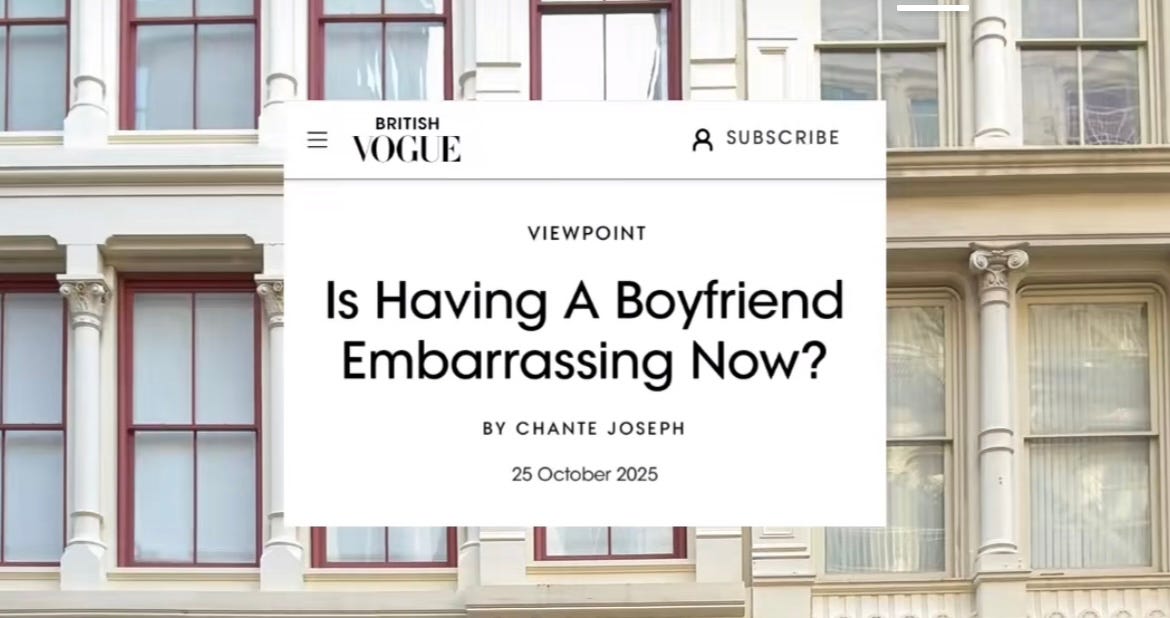
I am grateful to be living through a time in which more of us are deprogramming and discovering the freedom of being unattached, at the very least in a legal sense. It’s satisfying to see artists like Lily Allen and Hayley Williams fully stepping into their power, post-breakups. The creative energy that flows like a fucking waterfall through a woman’s body the second she stops pouring her energy into a difficult or dangerous relationship with a man. In a recent Kae Tempest interview, they recalled some advice they’d been given about creating, which is that ‘if you turn away from the light for long enough, it doesn’t die, it just stops trying to find you.’ I had my back to the light for so long, facing instead towards the person I thought was my sun, my moon, my stars, only to discover they were a black hole. I’m lucky to have escaped before the last sliver of light disappeared completely. The ‘having a boyfriend is embarrassing’ discourse of November 2025, promoted by Chante Joseph, was a pleasing affirmation of my commitment to remain untethered and unbothered by a partner for the foreseeable.
I’ve been here before; I swore after my divorce that I would have no part of it again, but my faith in forever hadn’t yet been fully crushed. My breakup of this year has finally put that to bed; buried it somewhere I have no wish to look for it. But these final throes have been a blessing; I’ve exorcised whatever social conditioning led me into thinking getting married was something I ‘should’ do if I loved someone the way I thought I did. It’s also taught me that it’s something I’m not very good at. I’m not cut out for a domestic romantic setup; I function better as a solo artist, lonely but resolved, uncomforted but comfortable in my own peace, surrounded by a network of incredible friends. I’ve experienced a lot of love, not all of it healthy, and had some semi-decent sex, but both have never been consistent or rewarding; both often more painful than I cared to admit. At the risk of sounding like a man with a podcast, the years I spent giving my love, time and energy to romantic partners is time I wish I’d spent on my work, with my family and friends, or sorting out my physical and mental health, both of which have vastly improved since my body was released from the constant fight-or-flight of my last relationship. This year has taught me just how resilient I can be, in every sense (nothing like lifting your own body weight in the gym to realise defaulting to someone else’s strength was never necessary). There’s an overarching calm to daily life I’ve never experienced before; one I hear older women speak of: an impenetrable, protective joy that we are loath to give up.
I truly hope that I’m done chasing dopamine from another human in a short term fix that burns my fingers when I drop the match. I am the best source of my own contentment. Forever has proven to be a fallacy too many times - I will not make that promise again, especially in an expensive dress in front of a group of people. It’s impossible to believe it could ever work - something I only understood once I’d gone from declaring my eternal commitment to someone, to sporadic texts saying ‘hope you’re doing well’, to walking past them without a word, just another stranger on the street. I’m glad I understand it. I’m very grateful to have come back to myself; to be living life exactly as I please; to that little girl in the garden who knew it was a fairytale, and was more than happy playing on her own.
* lyric stolen from Self Esteem
You inspire me so much 🖤 thank you for sharing your thought like this. They truly help guide me in my own life often.